
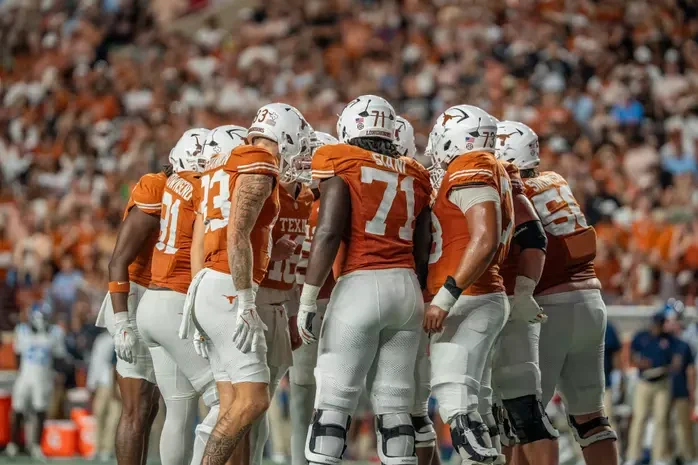
Your first Texas football game can feel like two events sharing the same afternoon. There is the game inside DKR-Texas Memorial Stadium, and there is the moving, noisy campus gathering outside it. Both are worth enjoying. The trick is leaving enough room for one without accidentally missing the other. A Saturday spent rushing between parking, tickets, and a distant gate usually needs a simpler plan, not a more ambitious itinerary.
Start by deciding what you want to remember. Perhaps it is the band before kickoff, a family photograph, watching warmups, or simply seeing the field from your own seat. Choose two priorities and build around them. You do not have to complete every campus activity to have a proper Longhorns experience. This guide is designed for an ordinary visitor making practical decisions, with the official game-day page supplying the rules and event times for the particular Saturday.
Make the game listing your first stop
Before booking anything, open the Texas football schedule and read the complete game entry. Check the opponent, date, city, venue, kickoff, and time zone. A Texas game is not automatically an Austin home game. Road trips and the neutral-site Oklahoma meeting involve different stadiums, entry arrangements, and travel needs. That basic check prevents a surprisingly expensive misunderstanding.
Write the details in one shared note rather than sending separate screenshots to everyone. Include when you last checked them. If kickoff is still listed as a window, describe your own plan as provisional too. An early hotel departure or restaurant reservation built around a guessed kickoff can become the most awkward part of the weekend. Let the official announcement settle the timetable before tightening the rest of it. Keep a little flexibility even after the time appears, because the university's current event communications remain the source for changes.
Check tickets before the journey starts
Confirm that the tickets are actually in the account you will use at the stadium. A purchase email is useful evidence of an order, but it is not the same task as opening and preparing the entry credential. Follow Texas Athletics' current mobile-ticket instructions on the device you intend to bring. Ask every adult attending separately to check their own access well before leaving home.
Then compare the tickets against the plan: correct opponent, correct date, required quantity, and the seats you intended to buy. If your group wants to sit together, make sure the actual seat numbers support that expectation. Write down the section and row somewhere accessible without searching a crowded inbox. Our mobile-ticket guide covers preparation in more detail. A quiet ten-minute check on Friday is much easier than troubleshooting with four people waiting behind you on Saturday.
Choose an arrival route you can explain
Your route needs a destination more precise than the stadium. If driving, identify the exact permitted parking facility and its vehicle entrance. If someone is dropping you off, agree on a legal stopping location outside restricted streets. If walking from accommodation, look at the whole walking route rather than measuring a straight line across a map. Campus access can look different on game day.
Share that route with the whole group. A useful explanation sounds like this: we will park at the reserved facility, walk along this street, meet by this landmark, and enter through the gate shown on our tickets. The individual locations depend on your booking and current restrictions, but the structure works for almost any visit. Save the official parking instructions with your reservation. The parking guide explains why the way out deserves just as much attention as the way in.
Give the pregame experience a clear boundary
Texas Athletics provides game-specific pregame schedules and introduced fan journey profiles for different visitor interests in 2026. That is a helpful starting point for choosing an experience, rather than following the crowd until it is nearly kickoff. Read the itinerary for your actual game, select the activity that matters most, and identify where it takes place relative to your gate.
Set a time to finish exploring. For example, your group might agree to stop adding new activities once it is time to begin the stadium walk. That is a personal planning boundary, not a university requirement. It matters because a short queue, a photograph, and a food stop can easily become three separate delays. If something takes longer than expected, drop the optional stop. You will enjoy the atmosphere more when nobody is checking the clock every thirty seconds or worrying that their first live kickoff is slipping away.
Pack around the actual stadium rules
Build your packing list from the current fan guide, not from what another venue allowed last month. Bags, containers, seat accessories, and other items can have their own requirements. Put the things you definitely need on the table first: phone, ticket access, payment method, identification where needed, and appropriate clothing. Then check each additional item before it goes into the bag.
The purpose is to make the entrance straightforward. Carrying more can mean more things to screen, hold, and keep track of in a crowded row. For a family, agree which adult carries shared items rather than duplicating everything. If an accessibility or medical requirement affects your plan, contact the appropriate official service in advance instead of relying on a general blog. Keep the response handy. Our stadium bag guide helps organize that review without replacing the university's item-by-item rules.
Treat the walk to your seat as part of arrival
Reaching the stadium exterior does not mean you are ready to watch. You still need to find the correct entrance, complete screening, locate the right concourse, and reach the section and row. A first-time visitor needs more orientation than someone who has used the same seats for years. Build that difference into your timing rather than treating it as an unexpected delay.
Once inside, find your seats before making another food or merchandise detour. Learn which nearby portal returns you to the section and identify a simple meeting point if anyone separates. If a view, stairway, or ticket detail seems wrong, ask an usher early. Do not spend the opening possessions wandering because somebody assumes the next staircase must be the right one. A calm arrival gives you time to look around, understand the stadium, and settle into the occasion you traveled to experience.
Watch a few things beyond the ball
The television camera decides what viewers at home see. Inside the stadium, you get to make that choice yourself. On an obvious passing situation, watch the offensive line for a play. On another, follow a receiver away from the ball or notice how the defense shifts before the snap. You do not need to identify every formation to enjoy a broader view of the game.
Give yourself permission to miss a detail. The scoreboard, official game statistics, and later recap can answer questions after the play. Keep phones and cameras low enough that the people behind you can see, and be patient with neighbors learning the sport. If you are bringing a newcomer, explain down and distance during a natural pause rather than talking through every snap. Shared attention is often what makes a first game memorable: a close third down, a sudden change in field position, or the whole section responding together.
Decide how the day ends before it begins
Before entering, agree whether your group plans to leave immediately after the game or wait for crowds to thin somewhere permitted. Pick a meeting point that does not depend on a weak mobile connection. Save a photograph of the parked vehicle's location and the facility name. Those small details become useful when everyone is tired and several nearby garages look familiar.
Avoid a fixed postgame reservation that assumes a precise finish time and an empty road. Football, pedestrian flow, and parking exits are all variable. If you must reach a flight or another commitment, plan conservatively and review the actual distance and transport arrangements before buying. For many first visits, keeping Sunday departure relaxed is worth more than adding another Saturday activity. Leave enough energy to enjoy the game itself, then use what you learn to make the next visit easier.
Try the plan with a delayed arrival
Before calling the itinerary finished, imagine reaching your parking facility thirty minutes later than intended. This is a planning exercise, not a traffic forecast. Ask what you would remove first. If the answer is the entire allowance for stadium entry, the plan needs more room. A photograph or extra campus stop is easier to drop than the time needed to locate your section.
Now imagine one guest needs a break during the walk. Identify a safe, permitted way to pause and how the rest of the group will respond. You do not need a detailed contingency document. You need a shared understanding that the optional parts can change without anyone feeling the day is ruined. This small rehearsal also reveals dependencies: perhaps the late-arriving friend holds all the tickets, or the driver has the only copy of the parking instructions. Resolve those details while the plan is still a note on a phone, rather than a hurried conversation beside the stadium.
A simple final review
The evening before the trip, have one person read the plan aloud: game details, tickets, parking or transport, main pregame stop, stadium entry, and meeting point afterward. Everyone should know where flexibility exists and which details still need an official update. This short conversation often reveals a missing ticket transfer or an assumption about who is driving before either becomes a problem.
Your first Saturday in Austin does not need to look like anybody else's. A visitor who watches the band, finds a comfortable seat, follows the game, and gets home without a frantic search has already done plenty. Save the optional discoveries for another trip. The best plan is one that gives the football enough space to become the reason you remember the day.
Sources and review date
Last reviewed October 29, 2026. Use the linked official sources for event-specific announcements, rules, and availability.
Frequently asked questions
How early should a first-time visitor arrive?
Work backward from the announced kickoff and allow time for your walk, entry, and finding the seats. Add a separate block for any pregame activity you choose; this is a planning approach, not an official gate-opening time.
Do all pregame activities follow the same timetable?
No. Use the official game-specific itinerary for that Saturday. A timetable saved from another opponent or season can be misleading.
This independent fan website is not affiliated with Texas Athletics.